Top AI Scribe Tools for Dentists 2026: Reviews & Benefits
Top AI Scribe Tools for Dentists in 2026: A Comprehensive Review
How to Evaluate the Best Dental AI Solutions for Your Private Practice
According to recent industry data, 71% of dentists report an increase in burnout since the start of the pandemic, with nearly 60% feeling it at least a few times a week. This exhaustion isn't driven by patient care, but by the crushing weight of administrative tasks, specifically, clinical documentation. If you are still typing notes after hours or sacrificing weekends to catch up on charts, you are fighting a battle that technology has already won.
This shift is driven by the rapid maturity of ambient AI in dentistry. The implications for private practice owners are significant because AI has evolved from simple voice-to-text dictation into intelligent "workflow orchestrators" that understand dental-specific terminology, periodontal charting, and billing codes.
After working with hundreds of private practices to automate their clinical and operational workflows, we know that choosing the right tool is about more than just accurate transcription. In this guide, you’ll discover the top AI scribe tools for 2026, a framework for evaluating them, and why a platform approach might be the missing link to true practice efficiency.
What is an AI dental scribe and why is it essential for modern practices?
An AI dental scribe is a software application that uses ambient listening and natural language processing (NLP) to listen to patient encounters and automatically generate structured clinical notes. It works by capturing the conversation between the dentist and patient in real-time, filtering out small talk, and extracting relevant medical data into formats like SOAP notes (Subjective, Objective, Assessment, Plan).
For dental practices, this means eliminating up to 50% of manual documentation time, allowing providers to save approximately 20 hours per week. Unlike older dictation tools that required you to say "period, new paragraph," modern AI scribes understand context. They can differentiate between a patient describing tooth pain and a dentist dictating a treatment plan for a crown.
Why this matters now:
Staffing Shortages: In 2025, staffing remains a primary hurdle for dental practices. AI reduces the dependency on human scribes or overburdened dental assistants.
Revenue Cycle Speed: AI tools can now suggest CDT codes based on the clinical notes, reducing claim denials and speeding up reimbursement.
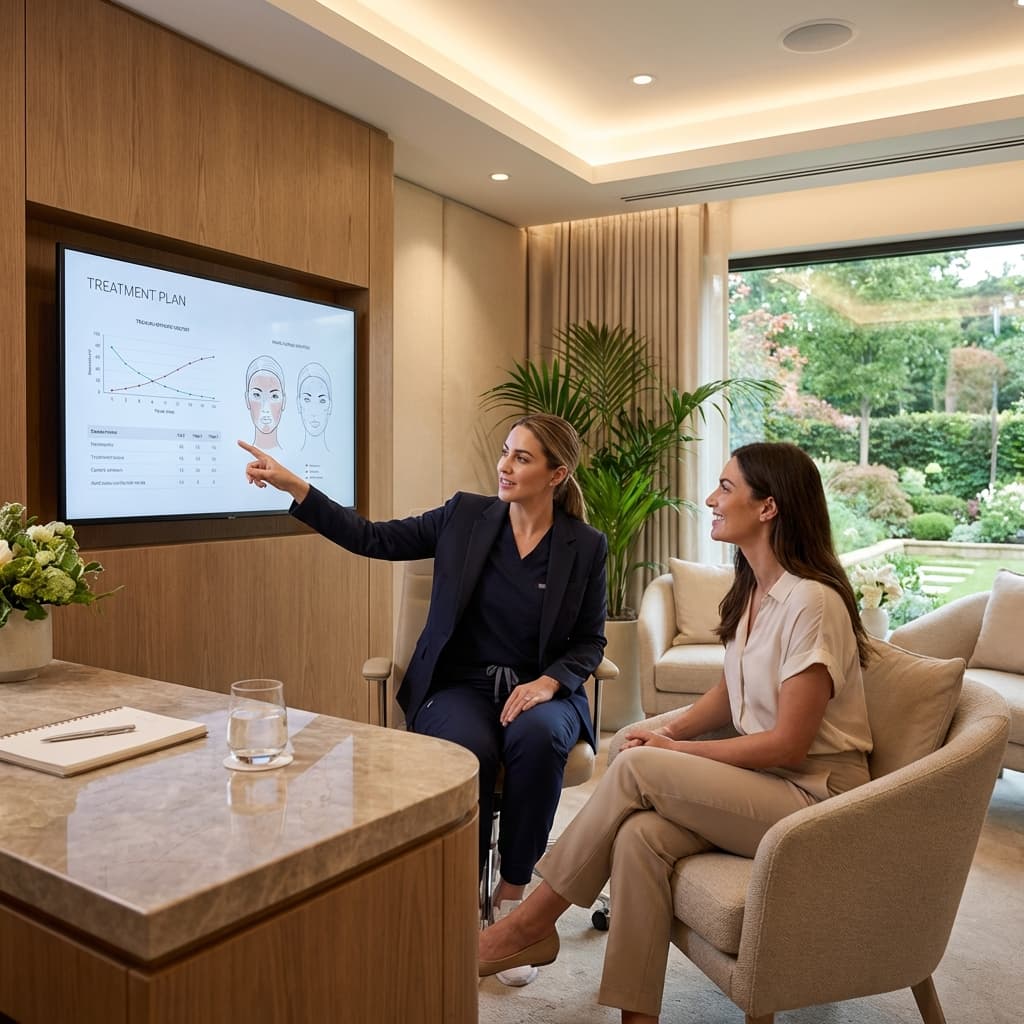
Patient Connection: With an ambient scribe, you can maintain eye contact with your patient instead of staring at a screen, improving trust and case acceptance.
What are the top AI scribe tools for dentists in 2026?
When reviewing the landscape of Dental AI, it is helpful to categorize tools by their primary focus: specialized point solutions (pure scribing/charting) versus comprehensive platforms.
1. Mentera (Best for Comprehensive Workflow Automation)
While most tools on this list are "point solutions," meaning they do one thing remarkably well, Mentera acts as an intelligent operating system for your entire practice. It is not just an AI scribe; it is a workflow orchestrator.
Best For: Practices seeking to automate actions, not just text.
Key Differentiator: Mentera integrates with 50+ healthcare and business tools (including Dentrix, Gmail, CRM, and Teams). It doesn't just write the note; it can trigger a follow-up task in your project management tool, sync with your EHR, or alert your billing team.
Why it wins: It solves the "silo problem" where your AI scribe doesn't talk to your other software.
2. OneChart.ai
OneChart has positioned itself as a leader specifically for dentistry in 2025/2026.
Best For: Dentists wanting a dedicated, compliant scribe without broader business automations.
Key Features: It offers voice-powered intake where patients can record symptoms before the visit, and it claims to save dentists up to 10 hours a week.
Pros: High accuracy with dental terminology and strong HIPAA/PIPEDA compliance.
3. Freed
Freed is a favorite among solo practitioners for its simplicity and affordability.
Best For: Budget-conscious solo dentists who need "set it and forget it" simplicity.
Key Features: It uses a hybrid approach of dictation and ambient listening. It is praised for its "effortless daily use" and month-to-month pricing flexibility.
Pros: Extremely fast onboarding (minutes, not weeks) and a low learning curve.
4. Denti.ai
Denti.ai stands out by combining voice technology with radiographic analysis to automate the most tedious parts of charting.
Best For: Practices looking to automate the specific "clicks" of periodontal charting and odontograms.
Key Features: Their flagship "Auto-Chart" feature listens to your voice commands and analyzes X-rays to populate the odontogram (existing restorations, missing teeth) automatically. They also offer a "Voice Perio" tool that allows hygienists to chart hands-free without an assistant.
Pros: It directly reduces the manual data entry burden for hygienists and offers competitive pricing (e.g., $49/month for their Detect product).
How do you evaluate AI scribe tools for your specific needs?
Choosing the right AI assistant is a strategic business decision. To avoid implementing a tool that gathers digital dust, use this four-point evaluation framework.
1. Integration Deep-Dive
Does the tool actually integrate with your Practice Management Software (PMS) or EHR? Many "integrations" are just glorified copy-paste functions.
Ask: "Does this tool push data directly into the periodontal chart and progress notes fields in Dentrix/EagleSoft/Open Dental, or do I have to manually transfer the text?"
The Mentera Edge: True integration means bi-directional data flow, where the AI can read context from the chart and write back to it.
2. Dental-Specific Vocabulary Training
General medical scribes often fail in dentistry. They might hear "number 30 MO" and transcribe it as "number 30 months old."
Test: During your demo, dictate a complex treatment plan involving tooth numbers, surfaces (MOD, OL), and specific materials (zirconia, lithium disilicate). If the AI fumbles the syntax, it will add more editing time to your day, not less.
3. Ambient vs. Dictation
Ambient: The AI listens to the natural conversation. This is the gold standard for reducing burnout because it requires zero behavioral change.
Dictation: You must summarize the visit after the patient leaves. This is cheaper but less efficient.
4. Security & Compliance
Dental practices are prime targets for cyberattacks.
Verify: Ensure the vendor signs a Business Associate Agreement (BAA) and does not use your patient data to train their public models without consent.
What are the benefits of a platform solution like Mentera vs. a point solution?
A point solution solves one specific problem (e.g., "Write this note"). A platform solution solves the workflow surrounding that problem.
For example, when a dentist finishes a crown prep, three things need to happen:
Clinical: The note needs to be documented (Subjective: pain, Objective: decay, Plan: crown prep).
Operational: The lab slip needs to be generated and the case tracked.
Financial: The claim needs to be coded and submitted.
A standard AI scribe only handles step #1. Mentera handles all three.
By connecting your scribe capability with your other tools (Practice Management, Communication, Task Managers), Mentera transforms the "data" of the note into "action."
Workflow Automation: Mentera can detect that a "referral to endodontist" was mentioned in the note and automatically draft the referral letter for your review.
Unified Intelligence: Instead of having patient data trapped in a scribe app, Mentera ensures it flows to where your team works (e.g., notifying the front desk via Teams that a patient is ready for checkout).
How do I start implementing AI in my dental practice?
Adopting AI doesn't require a complete overhaul of your practice. Follow this step-by-step implementation plan to minimize disruption.
Audit Your "Time Thieves": For one week, track exactly when you are documenting. Is it during lunch? After 5 PM? This establishes your baseline for ROI.
Run a Parallel Pilot: Don't switch cold turkey. Select one provider (likely your tech-savviest associate) to use the AI tool for 3 days alongside their normal workflow.
Test the "Edge Cases": Don't just test simple cleanings. Test a complex implant consultation or a multi-quadrant restorative case. This is where AI hallucinations typically occur.
Train on Consent: You must obtain patient consent before recording. A simple script works best: "I use an AI assistant to take notes so I can focus 100% on you instead of my computer. Is that okay?"
Review and Refine: In the first week, review every note. The AI learns from your edits (if the platform supports adaptive learning), so early corrections pay dividends later.
Frequently Asked Questions
Is using an AI scribe in a dental practice HIPAA compliant?
Yes, provided the vendor signs a Business Associate Agreement (BAA) and encrypts data both in transit and at rest. Always verify that the AI does not store audio recordings longer than necessary and that your patient consent forms are updated to include AI-assisted documentation.
Will AI scribes work with complex periodontal charting?
Yes, if you choose a tool specialized for it. Denti.ai, for example, is specifically designed to recognize rapid-fire number sequences (e.g., "3, 2, 3... 4, 2, 3") and auto-populate the periodontal chart, a task where general medical scribes often fail.
Can AI scribes integrate with server-based software like Dentrix or EagleSoft?
A: Direct integration with older server-based systems is challenging. Many scribes use a "copy-paste" bridge or a browser extension. Platforms like Mentera specialize in deeper integrations that bridge the gap between modern cloud AI and legacy server software.
Conclusion
The era of manual charting in dentistry is drawing to a close. The three most critical takeaways for 2026 are:
Burnout is optional: Tools like Mentera, OneChart, Freed, and Denti.ai can immediately reclaim 10 hours of your week.
Context is King: Dental-specific AI outperforms general medical AI because it understands the nuances of tooth numbers, surfaces, and procedures.
Orchestration beats Isolation: While a scribe is helpful, a platform like Mentera that connects your notes to your billing, scheduling, and team communication offers a far superior ROI.
As dental technology continues to evolve, practices that view AI not just as a "fancy dictaphone" but as an operational partner will see the massive gains in profitability and work-life balance.
This week, try this challenge: Download a trial of an AI scribe and use it for just your morning huddle or three hygiene checks to see the difference in focus.
Ready to stop typing and start orchestrating? Contact Mentera today to see how we can connect your clinical notes to your entire practice workflow, turning documentation into done.