Top AI Scribe Tools for Med Spas in 2026: A Comprehensive Review
How to Evaluate the Best Documentation Solutions for Your Aesthetic Practice
Many nurses and physicians transition into aesthetic medicine to escape the burnout of hospital wards, only to find themselves trading 12-hour shifts for late nights of charting. According to recent surveys, over 40% of aesthetic providers report that documentation is the single biggest bottleneck in their day, often consuming 2+ hours of "pajama time" every night. If you are still manually typing "30 units Dysport, Glabella" into your EMR while your patient waits, you are leaving money, and your sanity, on the table.
This shift in 2026 is driven by the arrival of specialized ambient AI for aesthetics. The implications for Med Spa owners and solo nurse injectors are massive because AI has evolved from generic medical dictation into intelligent "workflow partners" that understand facial anatomy, product dosing, and the nuances of a Good Faith Exam (GFE).
After consulting with dozens of top aesthetic practices to streamline their operations, we know that the "best" tool isn't just the one that types the fastest, it's the one that fits your unique flow. In this guide, you’ll discover the top AI scribe tools for 2026, a framework for evaluating them for injectables and laser treatments, and why a platform approach is the key to scaling your business.
What is an aesthetic AI scribe and why is it essential now?
An aesthetic AI scribe is a software application that uses ambient listening to capture your consultation and treatment details in real-time, automatically generating structured charts. Unlike a standard medical scribe, an aesthetic-focused AI understands the specific language of beauty—differentiating between a "consultation for facial balancing" and a "follow-up for lip filler migration."
It works by listening to the natural conversation between you and the patient ("I'm going to inject 0.1ml here in the vermillion border..."), filtering out the social chatter, and extracting the critical data points (Product, Lot #, Volume, Location) into a SOAP note or procedure note.
For med spas, this means:
Zero "Memory Fatigue": No more trying to remember exactly how many threads you placed in the mid-face three hours later.
Higher Average Order Value (AOV): When you aren't staring at a screen, you can focus on the consultation and cross-selling skincare or future treatments.
Legal Protection: AI captures the entirety of the informed consent conversation, offering a layer of protection that manual notes often miss.
What are the top AI scribe tools for Med Spas in 2026?
When reviewing the landscape of Aesthetic AI, it helps to distinguish between tools that simply write text and platforms that manage the entire patient journey.
1. Mentera
While most tools on this list are "point solutions," meaning they do one thing remarkably well, Mentera acts as an intelligent operating system for your entire practice. It is not just an AI scribe; it is a workflow orchestrator.
Best For: Med Spa owners and high-volume injectors who want to automate charts and the business tasks that follow.
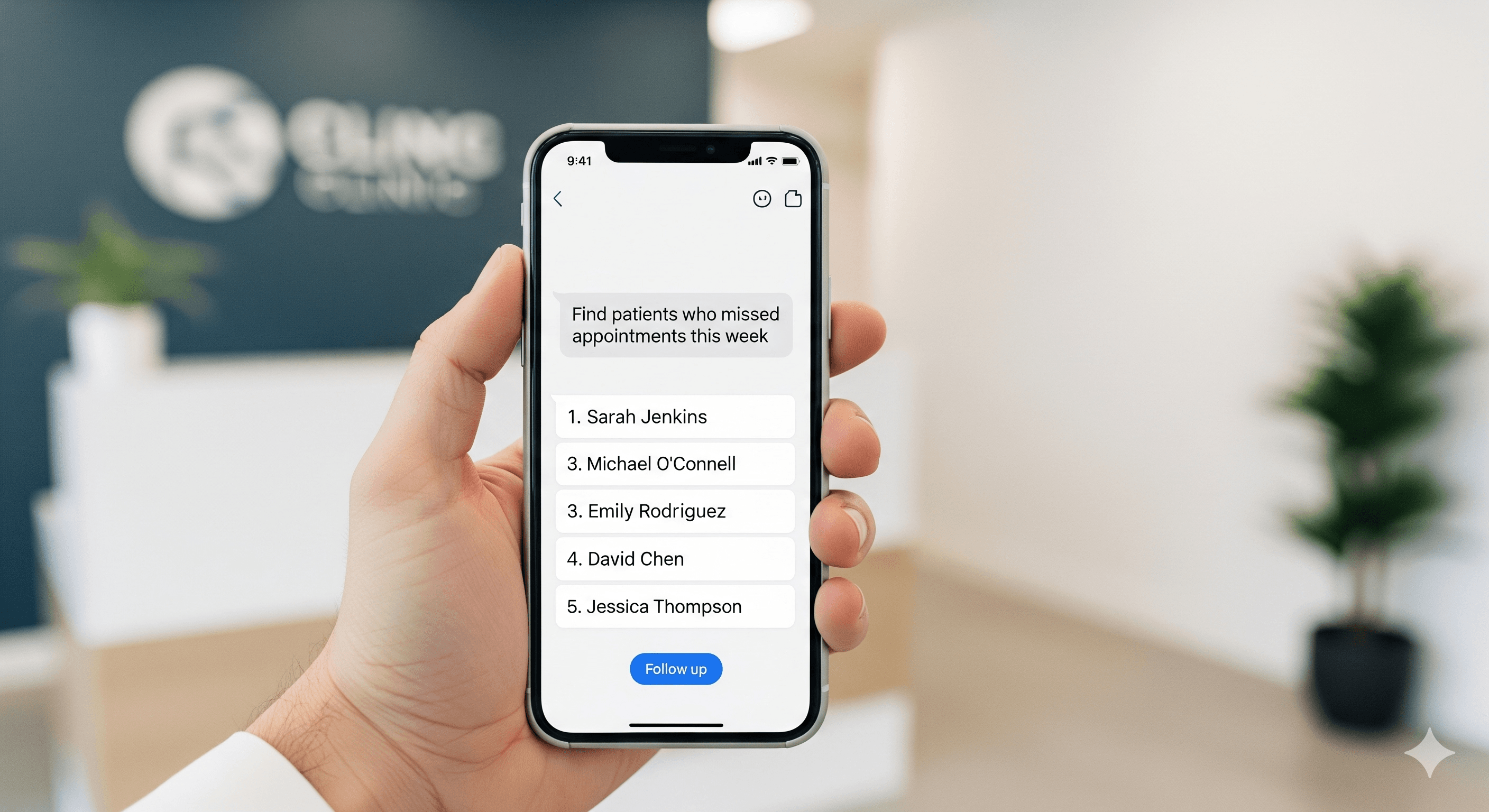
Key Differentiator: Mentera integrates with the broader ecosystem of a modern Med Spa. It doesn't just document the "50 units of Botox"; it can identify that the patient mentioned a wedding next month and automatically trigger a task to schedule a facial 2 weeks prior.
Why it wins: It solves the "disconnected data" problem. Most scribes leave the data in a text file. Mentera helps you act on it, syncing with your other tools to ensure follow-ups and deposits aren't missed.
2. Heidi Health
Heidi has gained traction globally for its extreme flexibility and "freemium" entry point.
Best For: Solo injectors or new practice owners starting with a lean budget.
Key Features: Heidi allows for high customization of templates. You can teach it to write notes exactly how you like them ("always mention the GFE was performed via telemedicine").
Pros: It offers a generous free tier that allows you to test ambient scribing without a credit card, making it a low-risk entry point for skeptics.
3. Freed
Freed is a favorite among independent nurse practitioners for its "browser-first" simplicity.
Best For: Injectors who want a "set it and forget it" tool that just works.
Key Features: Freed listens and writes. It doesn't overcomplicate things with complex settings. It uses a "copy-paste" method that works with any web-based EMR (like Aesthetic Record or Boulevard).
Pros: The learning curve is non-existent. You press a button, it listens, and you get a SOAP note.
4. Integrated EMR Solutions (Aesthetic Record / Nextech)
Many industry-standard EMRs are beginning to roll out their own native AI features.
Best For: Practices that want everything strictly inside one login.
Key Features: These are built directly into the charting workflow you already use.
Pros: Convenience. There is no need to open a second tab. However, native features often lag behind dedicated AI companies in terms of speed and conversational understanding.
How do you evaluate AI scribe tools for your specific needs?
Choosing an AI assistant for a Med Spa is different than for a Family Practice. Use this framework to ensure the tool can handle the nuances of aesthetics.
1. The "Product & Units" Test
General medical AI struggles with the math of aesthetics. It might hear "20 units" and write it as "20 minutes." Test: During a demo, dictate a complex treatment: "I'm placing 10 units of Botox in the frontalis, 20 in the glabella, and 12 in the crows feet." Check if the AI correctly categorizes these into the Objective section of your note with the correct drug name.
2. Integration with Aesthetic EMRs
Med Spas use specialized software (Zenoti, Boulevard, Aesthetic Record). A scribe that doesn't play nice with these is a burden. Ask: "How do I get this note into my chart?" If the answer is "email it to yourself," run. Look for browser extensions or direct integrations that allow for one-click transfers.
3. "Vibe" & Patient Experience
In a luxury Med Spa, pulling out a clunky laptop ruins the vibe. Ambient: The tool should run in the background on a phone or tablet, allowing you to maintain eye contact and build rapport—which is critical for closing aesthetic treatment plans.
4. Privacy & Photos
Aesthetics is visual. Verify: Does the workflow support the handling of before/after photos? While the scribe handles text, a platform like Mentera can help ensure the photo management workflow is seamless alongside the text.
What are the benefits of a platform solution like Mentera vs. a point solution?
A "point solution" (like a basic dictation app) solves one specific problem: Writing text. A "platform solution" (like Mentera) solves the workflow: Managing the Patient Journey.
For example, when an injector finishes a cheek filler treatment, three things need to happen:
Clinical: The chart needs to document the product, lot number, and safety checks (capillary refill).
Operational: The inventory needs to be deducted from the system.
Client Success: A follow-up text needs to be scheduled for 2 weeks to check for settling/bruising.
A standard AI scribe stops at step #1. Mentera thinks about all three. By connecting your clinical documentation to your wider practice operations, Mentera transforms a "note" into a "business asset."
How do I start implementing AI in my Med Spa?
Adopting AI is the easiest way to immediately increase your hourly revenue by freeing up time for more patients.
Audit Your "Pajama Time": Track how many hours a week you spend charting after the clinic closes. Multiply that by your hourly injection rate. That is the cost of not having AI.
Run a "Consultation Pilot": Start by using the AI only for consultations. These are often the most text-heavy interactions (discussing goals, medical history, budget). It allows you to get comfortable without risking errors on a procedure note.
Train the "Good Faith Exam": Ensure your AI template automatically includes the standard GFE language required by your state, saving you from typing the same legal boilerplate 20 times a day.
Patient Consent: Simply say, "I use an AI assistant to take notes so I can focus 100% on your face and our plan, rather than my iPad. It keeps everything private and accurate. Sound good?" 99% of patients will be impressed by the technology.
Frequently Asked Questions
Is AI compliant with HIPAA and Med Spa regulations?
Yes, provided the vendor signs a Business Associate Agreement (BAA). AI tools for healthcare do not store audio permanently and redact PII (Personally Identifiable Information) before processing in many cases. Always verify the BAA.
Will it understand aesthetic slang like "tox," "eleven lines," or "bunny lines"?
Top-tier AI tools are trained on vast medical datasets. However, you may need to add specific "custom vocabulary" for niche slang or specific product names (e.g., "Daxxify," "SkinVive") to ensure 100% accuracy.
Can it help with liability protection?
Absolutely. AI scribes capture the context of the consent discussion, proving that you discussed risks like vascular occlusion or asymmetry, which is often more detailed than a checked box on a paper form.
Conclusion
The "Golden Age" of aesthetic medicine shouldn't be defined by paperwork. The three takeaways for Med Spa owners in 2026 are:
Manual Charting is a Revenue Leak: Every minute spent typing is a minute not injecting or consulting. Tools like Mentera, Heidi, and Freed plug this leak instantly.
Accuracy Equals Safety: AI captures the details—lot numbers, precise locations, patient warnings—that exhausted human brains often miss.
Think Beyond the Note: While a scribe is great, a workflow partner like Mentera that connects that note to your inventory, scheduling, and patient follow-up is how you build a scalable, sellable business.
This week's challenge: Pick one afternoon and use an AI scribe for every consultation. Measure how much more eye contact you make with your patients. The difference in connection, and conversion, will be immediate.
Ready to upgrade your practice from manual typing to automated intelligence? Contact Mentera today to see how we can orchestrate your entire clinical workflow.